
Vaasa
A bilingual coastal city and the Kvarken Archipelago
Vaasa is a bilingual coastal city with access to the low islands of Kvarken. Visit the museums for the landscape’s context, then cross Replot Bridge towards Svedjehamn. Arriving by ferry from Sweden adds two port transfers to the journey.
On this page
Begin in central Vaasa
Vaasa is Vasa in Swedish. Both languages appear across the region: Replot and Raippaluoto name the same island, while Björköby and Björkön kylä refer to the same village. These paired names help when searching for accommodation and transport.
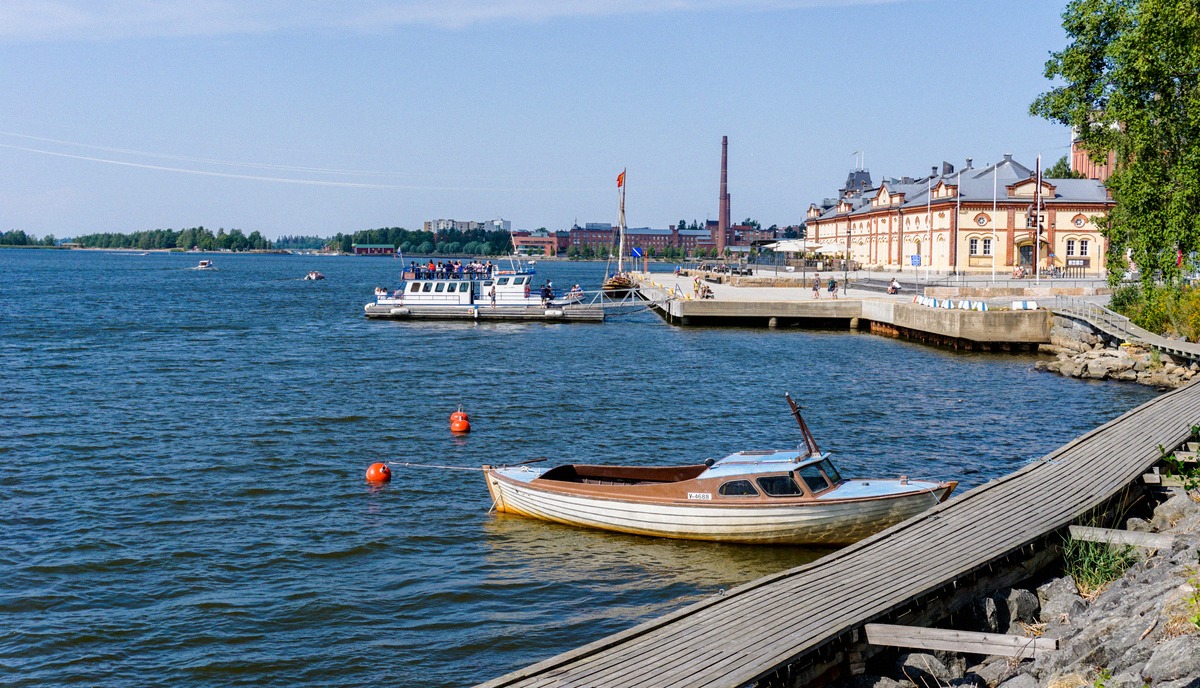
Begin around the market square and waterfront. The Ostrobothnian Museum combines regional history with Terranova, its nature exhibition on the Ice Age, coastal environment and Kvarken. Visit before an archipelago day if you want context for the low, stony landscape. Kuntsi offers contemporary art as another cultural focus.
Old Vaasa is a separate outing
Vanha Vaasa, or Gamla Vasa, lies around seven kilometres from today's centre. After the fire of 1852 the city was rebuilt closer to the sea. This is not an old-town quarter immediately behind the market square.
Visit the ruins of St Mary's Church, the former courthouse later converted into Mustasaari Church, and the surviving stone Wasastjerna house, which contains the seasonal Old Vaasa Museum. Trees, ruins and open spaces separate the buildings, creating a different walk from a continuous historic street.
Bus, bicycle or car can provide the approach. Old Vaasa lies in a different direction from the northern Kvarken islands; with one day, choose it or the archipelago rather than assuming it is on the way.
Why Kvarken is World Heritage
Kvarken and Sweden's High Coast form a transboundary World Heritage property. Here the land continues rising after the last Ice Age. Shallow bays become separated from the sea, islands join and low moraine ridges reveal the glacial landscape.
Finland's low islands differ markedly from the high Swedish coast. A tower view makes the ridges and water patterns easier to understand. A promenade walk in Vaasa is not a substitute for going out into the archipelago.
Replot and Svedjehamn
At Replot Bridge, World Heritage Gateway provides an introductory exhibition. Continue by road across Replot to Björkö and Svedjehamn fishing harbour. These destinations are linked by roads and bridges; no car ferry is needed.
For a short visit, concentrate on the boathouses and Saltkaret observation tower. For more walking, Bodvattnet runt is an approximately four-kilometre circuit showing changing shores and former harbour locations. Allow a full day from Vaasa if you want the gateway exhibition and the walk.
Without a car, organised seasonal bus excursions run on selected dates; they are not a year-round local connection. In winter, the path from Svedjehamn's car park to Saltkaret is cleared, while the rest of the circuit has no winter maintenance.
Arriving from Umeå
Wasaline links Umeå and Vaasa. The Swedish terminal is at Holmsund outside central Umeå; Vaasa's terminal is on Vaskiluoto, around four kilometres west of the centre. Foot passengers need both port transfers. Book the Umeå transfer before sailing and check whether the Vaasa transfer bus meets your arrival: some late-night arrivals have no bus, requiring a taxi or collection.
Finland is one hour ahead of Sweden, and timetables use local time. Allow space between a train, port transfer and sailing. Two nights can separate a late arrival from a city visit and a full archipelago day.