
World Heritage Sites in Finland
Eight sites and three regional routes
Finland’s World Heritage list ranges from a lived-in wooden town to a chain of survey points. Seven entries are cultural sites. The eighth, the High Coast and Kvarken Archipelago, follows a landscape still rising from the Baltic Sea.
On this page
The eight sites at a glance
Two visits from Rauma
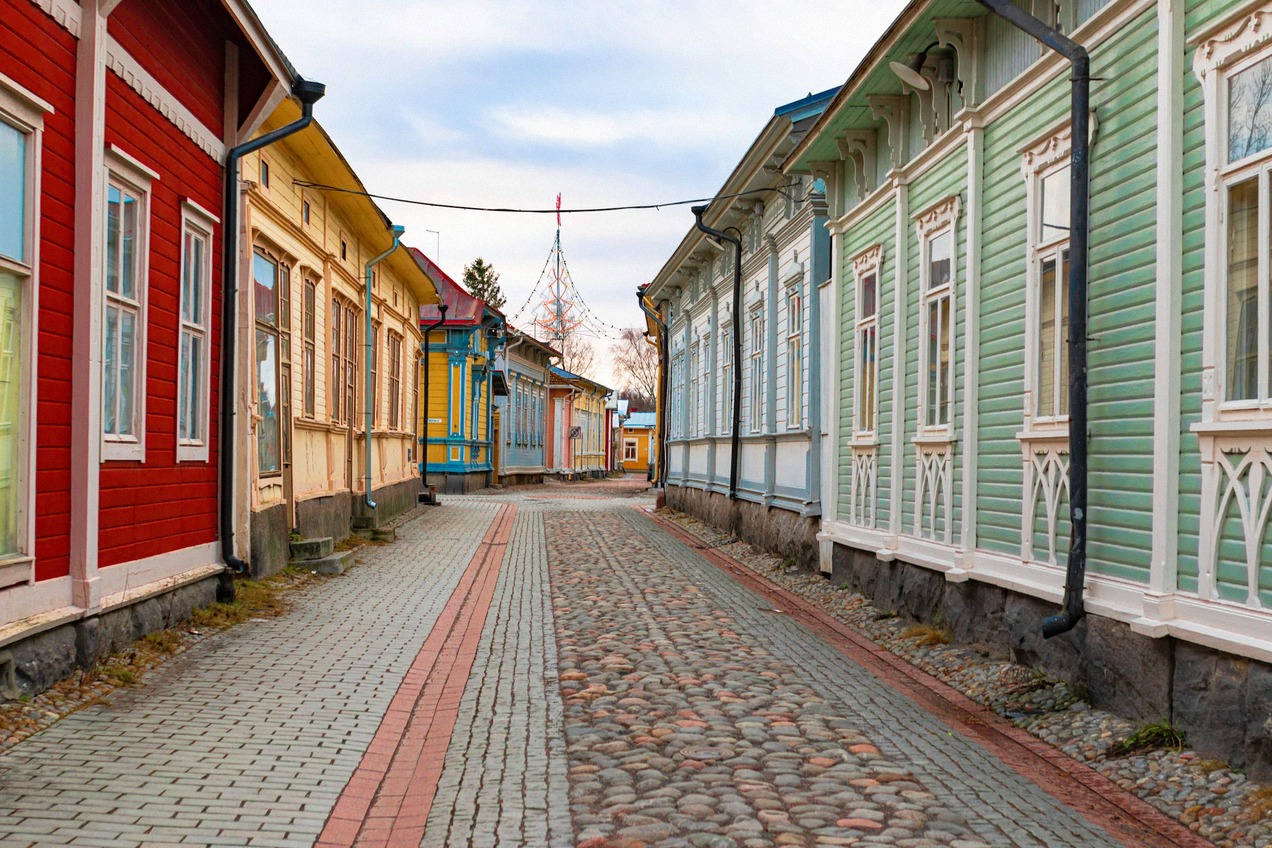
Old Rauma is a residential district as well as a visitor destination. The streets are public, while individual workshops, museums and courtyards have their own opening arrangements. Stay in town long enough to see how the scale and colour of the streets change from the market square to the quieter lanes.
Sammallahdenmäki is about 20 kilometres away. One of the site entrances is at Savulaaksontie 181. There is no public bus to the site. Arrange a taxi, car or bicycle and allow for both legs. Entry is free, but the paths cross uneven rock and roots and have no winter maintenance. Stay on marked paths, keep off the burial cairns and leave the stones in place.
Suomenlinna and Petäjävesi
HSL’s year-round ferry links central Helsinki with Suomenlinna. Walking around the inhabited fortress islands and visiting a museum are different parts of the day. Each museum sets its own opening hours. A late return ferry leaves time for a shore walk after the museums close.
West of Jyväskylä, Petäjävesi Old Church was built in 1763-65. Its timber vault and joinery are the reason to go inside. Regular visitor opening is from June to August. At other times, arrange a visit in advance. Church events can affect access. A view from the lakeside and a tour of the interior are quite different experiences.
Verla and the Struve Geodetic Arc
Verla preserves a groundwood and board mill and its village. The factory is at Verlantie 295, about 32 kilometres by road from Kouvola. Book a museum tour in a language you understand and arrange the return trip from the village. Walking around the grounds will not give you access to the old machines.
The Struve Geodetic Arc marks the survey used to measure the shape and size of the Earth. Near Korpilahti, a signed path from Vanhanpääntie climbs to the Puolakka point on Oravivuori. It is about a kilometre each way, with roughly 90 metres of ascent. The reward is an outlook over Päijänne. On a northern journey, Alatornio Church in Tornio, at Kirkonmäentie 86, is an easier place to approach. The historical survey used the church tower.
The Kvarken archipelago
For the Finnish side of the shared Swedish and Finnish natural site, start in Vaasa. Drive across the Replot Bridge towards Svedjehamn near Björköby. From the Saltkaret observation tower, low parallel moraine ridges and shallow channels reveal a pattern that is hard to pick out from the harbour. Allow a day for the archipelago from Vaasa if you want to walk as well as climb the tower.
The architecture of Aalto Works
Inscribed in 2026, Aalto Works brings together 13 buildings and ensembles associated with Alvar, Aino and Elissa Aalto, their office and collaborators. In Helsinki the group includes Finlandia Hall, the Aalto House and Studio Aalto. A public building may have working offices or timed tours, so check access to each one separately.
Three components lie in the Jyväskylä area: the university campus, Säynätsalo Town Hall and Muuratsalo Experimental House. The last requires a pre-booked summer visit and has an uneven approach on foot. Aalto2 introduces the architects’ work but is separate from these three components.
Three regional itineraries
Capital and south-east. Combine the fortress and Helsinki’s Aalto architecture first. With more time, continue to Kouvola and set aside a separate visit to Verla. A tight city weekend is better spent on Helsinki and the islands.
West coast. Start with Old Rauma and an excursion to the cairns. Continue north, adding the Pori area for Villa Mairea if you have arranged a visit. End in Vaasa for Kvarken. The coastal guide covers the towns between crossings and island walks.
Central Finland. Stay in Jyväskylä, visit the campus and plan Säynätsalo around the tour time at Muuratsalo. Petäjävesi lies in another direction. Give the Oravivuori walk its own half-day rather than squeezing all three excursions into a single afternoon.